
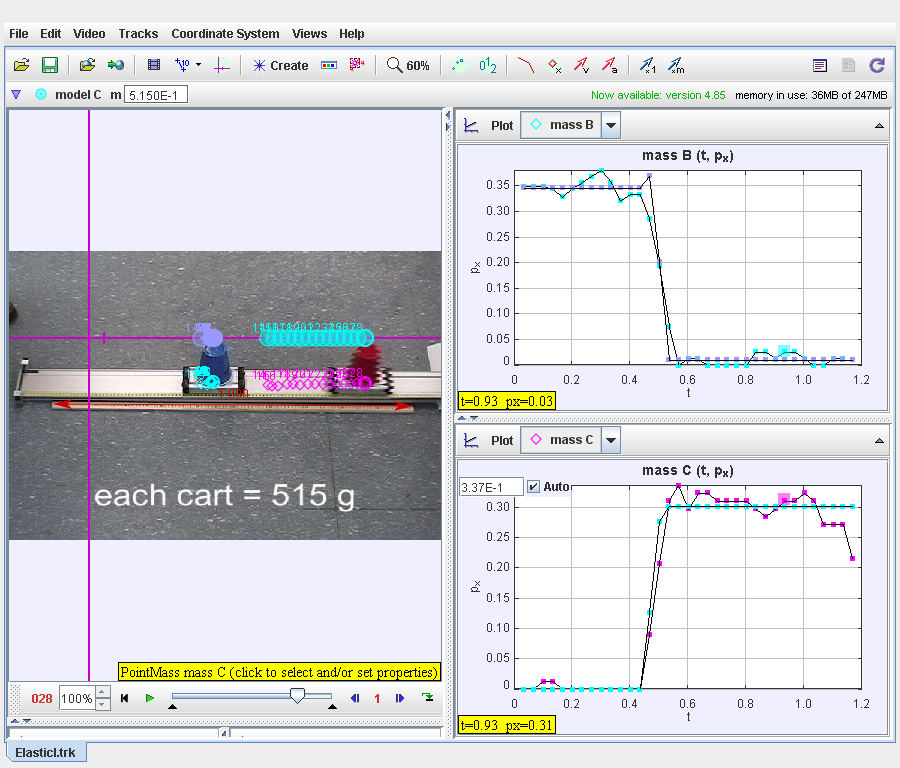
Research digest: The paper uses a collision cart model to support experiential learning of momentum and collisions. It is valuable because students can vary masses and velocities, then compare before-and-after quantities.
Classroom use: Ask students to predict the outcome of elastic and inelastic collisions before running the model. Then compare total momentum and kinetic energy.
Paper: arXiv:1204.4964
Authors: Loo Kang Wee
Publication: Physics Education, 47(3), 301 (2012)
Theme: One-dimensional collision carts model
What teachers can take from this
The paper uses a collision cart model to support experiential learning of momentum and collisions. It is valuable because students can vary masses and velocities, then compare before-and-after quantities.
Use it tomorrow
Ask students to predict the outcome of elastic and inelastic collisions before running the model. Then compare total momentum and kinetic energy.
Pedagogical move
Use conservation checks as the sense-making tool: what stayed the same, what changed, and why?
Good discussion prompts
- What evidence does the model, video, or activity make visible?
- Which variable should students change first, and what should they keep constant?
- What claim can students make from the evidence, and what limitation should they acknowledge?