
Research digest: Electromagnetic induction is conceptually dense because learners need to coordinate motion, magnetic field change, induced current, and direction. This paper supports a blended approach where simulation, discussion, and classroom tasks work together.
Classroom use: Let students vary magnet speed, coil turns, or field orientation in a simulation before discussing Faraday's and Lenz's laws.
Paper: arXiv:1501.01527
Authors: Charles Chew, Loo Kang Wee
Publication: SCIOS Journal
Theme: Blended learning for electromagnetic induction
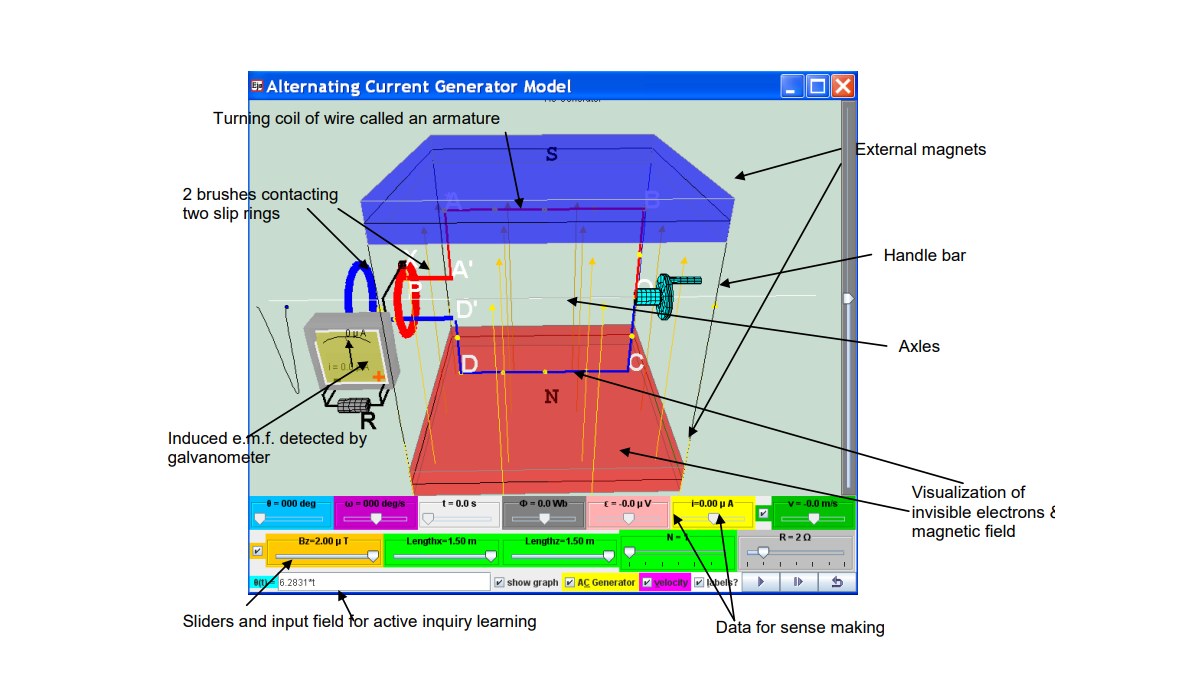
What teachers can take from this
Electromagnetic induction is conceptually dense because learners need to coordinate motion, magnetic field change, induced current, and direction. This paper supports a blended approach where simulation, discussion, and classroom tasks work together.
Use it tomorrow
Let students vary magnet speed, coil turns, or field orientation in a simulation before discussing Faraday's and Lenz's laws.
Pedagogical move
Ask students to predict the direction first, test it, then explain any mismatch between prediction and result.
Good discussion prompts
- What evidence does the model, video, or activity make visible?
- Which variable should students change first, and what should they keep constant?
- What claim can students make from the evidence, and what limitation should they acknowledge?